




Every journey has defining moments that shape its direction—and for Emmerson Packaging, the years ahead would bring new ventures, unexpected challenges, and remarkable growth. As we continue unfolding this company’s history, you’ll find that each chapter builds on the last. If you haven’t yet explored the origins and earliest milestones in our first two blog posts, we recommend starting there for valuable background and fresh perspective.
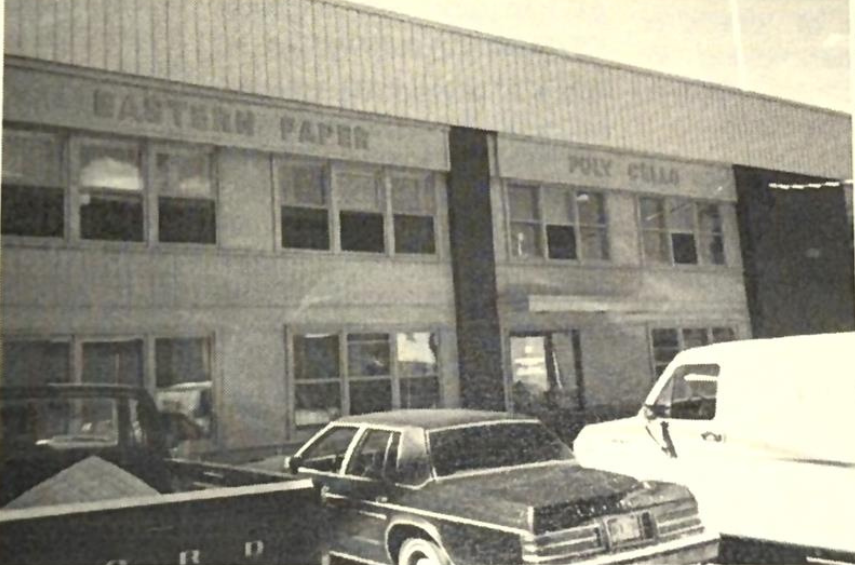
By the mid-1950s, Eastern Paper had grown significantly, building a strong market volume in flexible packaging. This success laid the foundation for the launch of Poly Cello Bags Ltd in 1956, a pivotal moment in the company’s history. But the entrepreneurial spirit of Philip Emmerson didn’t stop there. Recognizing another opportunity, Eastern Paper also ventured into the folding carton business, establishing a new subsidiary in Halifax. This new division was dedicated to manufacturing printed and plain folding cartons, with its largest customer segment being the fishing industry, which relied heavily on waxed cartons for frozen fish packaging.A New Generation and New Challenges
Despite its potential, the folding carton business faced a rocky start. It was during this challenging time, in 1963, that Philip’s son, John Emmerson, joined the team. John’s journey to the family business was anything but straightforward. After a year of university with little direction, he enlisted in the Royal Canadian Navy’s Air Division, where he spent three transformative years. Aboard the aircraft carrier Bonaventure, John had time for reflection and realized that his future lay in the family business. As he put it, “Sometimes one can’t see the forest for the trees.”
John’s entry into the business was guided by sage advice from his uncle, a prominent banker in Halifax. Recognizing the importance of financial acumen, his uncle encouraged John to pursue an accounting certification. While John’s true passion wasn’t accounting, this training equipped him with the tools to leverage financial data for strategic business planning. His real interests lay in marketing, negotiating contracts, and building something meaningful through collaboration.
Forging a Leader Through Fire
John’s early days at the folding carton subsidiary were shaped by his mentor, Doug Roberts, the plant manager. Doug insisted that John spend three months working in every area of the plant to understand the manufacturing process from the ground up. Once in the office, Doug taught him price estimating, scheduling, and good manufacturing practices—skills that would later prove invaluable at Poly Cello. When unforeseen circumstances removed Doug from the business, John found himself running the folding carton plant at just 23 years old. Balancing this responsibility with his studies and personal life, including his marriage to his high school sweetheart, Deanna, was a period of immense growth for John.
Despite John’s efforts, the folding carton business continued to struggle under tough market conditions. When a renowned lithographic printer from Toronto expressed interest in acquiring the business, Philip Emmerson saw an opportunity. A deal was struck, and the business was sold. This transition allowed John to gain invaluable experience in marketing and sales while learning the intricacies of color printing and lithography under a new general manager.
Shifting Tides in the Packaging Industry
Meanwhile, the competitive landscape was shifting. A major chemical company was entering the flexo printing and converting business, expanding at a fast rate by acquiring several operations across the country. In 1964, they made an unsuccessful bid to purchase Poly Cello Bags Ltd. Undeterred, this competitor established a plant in Amherst, equipped with state-of-the-art technology.
Their expansion didn’t stop there. The competitor acquired the Winnipeg-based operation that happened to own one-third of Poly Cello Bags Ltd. This meant that Poly Cello’s primary competitor now had a direct stake in the company, creating a complex and challenging dynamic for Philip and his team.
To counter these developments, Philip Emmerson took a bold step. He convinced a leading Canadian chemical company to set up a film extrusion operation in the same building as Poly Cello’s plant and Eastern Paper’s distribution center in Saint John. This move ensured a reliable supply of polyethylene film, reducing dependence on their new part-owner and competitor, and positioning Poly Cello for future growth.
Adapting and Evolving
The 1960s were a time of rapid change and innovation. The market for cellulose film, or “cellophane,” was being overtaken by newer materials like polypropylene, signaling a shift in the industry. These changes, while challenging, also opened the door to exciting opportunities for Poly Cello’s future.
As the journey unfolded through new challenges and breakthroughs, Emmerson Packaging continued to adapt, innovate, and grow. These formative years set the wheels in motion for future transformations—innovations and leadership moments that would shape the company’s legacy for decades. Continue following along as we delve deeper into the pivotal chapters that await, where ambition meets opportunity and Emmerson Packaging’s story takes on new dimensions!